Air source heat pumps are fast becoming a go-to solution for efficient, low-carbon heating, but they’re not perfect. While they promise lower energy bills and year-round comfort, a few practical challenges can impact their performance.
Before making the switch, it’s worth understanding the trade-offs associated with this modern heating technology.
What are heat pumps?
An air source heat pump is an energy-efficient system designed to transfer heat rather than generate it. Unlike traditional central heating boilers or electric heaters, which create warmth by burning fuel or using electricity directly, a heat pump extracts heat from the air, ground, or water and transfers it into your home.
There are three main types of heat pumps:
- Air source heat pumps: These absorb heat from the outside air and transfer it indoors. They’re the most common and widely used type in UK homes.
- Ground-source heat pumps: These draw heat from underground, where temperatures remain relatively stable throughout the year.
- Water source heat pumps: These extract heat from nearby water sources such as lakes, rivers, or boreholes.
What are Heat Pumps?
Heat pumps have become a popular choice for homeowners, reducing their energy costs and reducing their carbon emissions. Unlike traditional heating systems that burn fuel, a heat pump uses renewable energy from the environment to provide both heating and cooling.
By efficiently transferring heat instead of generating it, these systems can deliver impressive performance while lowering your home’s environmental impact.
How do heat pumps work?
An air source heat pump operates by moving heat from one place to another using a refrigeration cycle, much like how a fridge or air conditioner works, but in reverse.
Instead of producing heat, it absorbs it from an external source such as the air, ground, or water and transfers it indoors.
Here’s how the process works:
- Heat absorption: The refrigerant captures heat from the environment.
- Compression: The refrigerant is compressed, increasing its temperature.
- Heat transfer: The heated refrigerant releases warmth into your home’s heating system.
- Expansion: The refrigerant cools as it expands, ready to absorb more heat.
Types of heat pumps: air source, ground source, and water source
There are three main types of heat pumps, each drawing energy from a different natural source:
- Air source heat pumps: Capture heat from the outside air, even in low temperatures. They’re the most common and affordable type for UK homes.
- Ground source heat pumps: Use underground pipes to extract steady, year-round warmth from the ground, offering excellent efficiency.
- Water source heat pumps: Draw heat from nearby water bodies such as lakes, rivers, or boreholes. These can be very efficient but require access to a suitable water source.
Efficiency Ratings of Heat Pumps
To understand how well a heat pump performs, it’s important to look at its efficiency ratings. These ratings measure how effectively the system converts energy into heating or cooling output.
The higher the rating, the more efficient the heat pump, meaning lower running costs and reduced environmental impact.
Explanation of Seasonal Energy Efficiency Ratio (SEER)
The Seasonal Energy Efficiency Ratio measures how efficient air source heat pumps are, and how they provide cooling over an entire season. It’s calculated by dividing the total cooling output by the total electricity used during the same period.
A higher SEER rating indicates better cooling performance and lower energy use. In the UK, a modern heat pump typically has a SEER rating between 14 and 20, depending on the model and conditions.
Heating Seasonal Performance Factor (HSPF)
The Heating Seasonal Performance Factor is the heating equivalent of SEER. It shows how efficiently a heat pump delivers heat across a full heating season.
It’s determined by dividing the total heating output by the electricity consumed. A higher HSPF means greater energy efficiency and lower operating costs. For most residential systems, an HSPF above 8 is considered efficient.
Coefficient of Performance (COP)
The Coefficient of Performance is another common efficiency measure, often used to show how much heat a heat pump produces compared to the electricity it uses at a given moment.
As an example, a COP of 4 means the system generates four units of heat for every unit of electricity consumed. While COP values can fluctuate depending on outdoor temperature and system design, a higher COP always reflects a more efficient system.
Factors Affecting the Efficiency of Air Source Heat Pumps
The efficiency of an air source heat pump can vary depending on several key factors.
While modern systems are designed to perform well in a range of conditions, their overall effectiveness depends on the climate, how well they’re installed, and how they’re maintained over time. Understanding these influences can help you get the most out of your system and ensure long-term savings.
Climate and outdoor temperature
Air source heat pumps work by drawing heat from the outside air, so their performance is closely linked to outdoor temperature. In mild climates, they operate at peak efficiency, but in colder conditions, the system must work harder to extract heat.
While most modern ASHPs can still perform efficiently in sub-zero temperatures, efficiency naturally drops as the air becomes colder. Choosing a model with stronger technology or a high seasonal performance rating can help maintain strong performance year-round.
Installation quality and system design
A well-designed and correctly installed heat pump system is crucial for achieving optimal efficiency. Factors such as the size of the unit, placement of the outdoor unit, insulation levels, and the layout of your home’s heating system all play a role.
Oversized or undersized units can lead to energy waste and reduced lifespan. That’s why it’s essential to work with a qualified installer who can design the system based on your home’s heating needs, property type, and local climate.
Maintenance and operational practices
Regular maintenance is vital for keeping your air source heat pump running efficiently. Tasks such as cleaning filters, checking refrigerant levels, and ensuring airflow around the outdoor unit can all make a difference.
In addition, using your system correctly, such as maintaining steady temperatures rather than frequently adjusting the thermostat, can improve efficiency. Scheduling professional servicing once a year helps detect potential issues early and ensures consistent performance.
Benefits of Using Air Source Heat Pumps
Air source heat pumps have become a popular choice for homeowners looking to make their heating systems more efficient and environmentally friendly.
By harnessing renewable heat from the air, they offer a cleaner and more sustainable alternative to traditional gas or oil boilers. Beyond lowering carbon emissions, they also provide long-term cost savings and year-round comfort.
Energy savings and cost-effectiveness
One of the biggest advantages of an air source heat pump is its ability to deliver more energy than it consumes.
For every unit of electricity used, a well-installed ASHP can produce up to three or four units of heat, significantly reducing running costs compared to electric or fossil fuel heating systems.
Although installation can be more expensive upfront, lower energy bills and potential government incentives, such as the Boiler Upgrade Scheme, help offset the initial investment over time.
Environmental impact and reduction of carbon footprint
Air source heat pumps use renewable energy from the air, producing far fewer carbon emissions than conventional heating systems.
By moving heat instead of generating it through combustion, they reduce dependence on fossil fuels and contribute to a more sustainable energy future. When paired with renewable electricity sources, such as solar panels, an ASHP can run almost entirely carbon-free, helping households meet net-zero goals.
Versatility in heating and cooling
Another key benefit of ASHPs is their ability to both heat and cool your home. In winter, they draw heat from the outside air and transfer it indoors; in summer, the process reverses to provide cooling, much like an air conditioner.
This dual functionality makes them ideal for year-round comfort and eliminates the need for separate heating and cooling systems.
Limitations of Air Source Heat Pumps
While air source heat pumps offer impressive efficiency and environmental benefits, they’re not without drawbacks.
Understanding their limitations helps homeowners make informed decisions and set realistic expectations about performance, costs, and practical considerations.
Performance in extreme temperatures
Air source heat pumps rely on extracting heat from the outside air, which means their efficiency can decline in very cold weather. Although modern systems are designed to operate in sub-zero conditions, they may need to work harder to maintain indoor comfort, increasing energy consumption.
In regions with prolonged freezing temperatures, a supplementary heating source, such as an electric or gas backup, may be required to ensure consistent warmth.
Initial installation costs
The upfront cost of purchasing and installing an ASHP can be higher than that of a conventional boiler. This is due to the system’s advanced technology and the need for professional installation.
However, while the initial investment can seem steep, the long-term savings on energy bills and access to government incentives can help recover these costs over time. Proper sizing and design are also crucial to avoid unnecessary expenses and ensure maximum efficiency.
Noise levels and aesthetic considerations
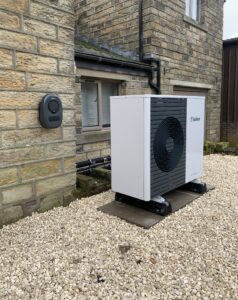
Although ASHPs are generally quiet, the outdoor unit does produce some noise during operation, particularly when running at higher speeds. For most properties, this isn’t an issue, but in compact or densely built areas, placement should be carefully considered to avoid disturbance.
Aesthetic factors can also come into play, as the external unit may not blend seamlessly with every property design. Choosing an appropriate location and ensuring adequate space can help minimise visual and acoustic impact.
Want to find out more about air source heat pumps? Let’s Chat!
If you have any further questions, please do not hesitate to get in touch and call us on 0333 3445 570. We would be more than happy to discuss and let you know how we are able to help you when you need to know the answer to ‘how efficient are air source heat pumps’?
We’re here to help!
FAQs about how efficient air source heat pumps are
Q: How efficient are air source heat pumps compared to traditional heating systems?
A: Air source heat pumps can achieve efficiency levels of 300% or more, meaning they produce up to three times more heat energy than the electricity they use. In contrast, even the most efficient gas boilers typically reach around 90–95% efficiency.
Q: What factors affect the efficiency of an air source heat pump?
A: The main factors include outdoor temperature, system design, insulation levels in your home, and how well the unit is installed and maintained. Poor installation or insufficient insulation can significantly reduce efficiency.
Q: Do air source heat pumps work efficiently in cold weather?
A: Yes, but efficiency does drop as the outside temperature decreases. Modern models are designed to operate efficiently in temperatures as low as -15°C, though they may need to work harder in extreme conditions.
Q: How can I improve the efficiency of my air source heat pump?
A: Regular servicing, proper insulation, setting the right temperature, and keeping filters clean all help your system perform at its best. Using underfloor heating or larger radiators can also enhance efficiency.
Q: Are air source heat pumps cost-effective in the long run?
A: Yes. Although installation costs are higher than traditional systems, their lower running costs and high efficiency mean you can save on energy bills over time, especially with government incentives or grants.