TL;DR: High boiler pressure is usually caused by too much water in the system or faulty components like the expansion vessel or pressure relief valve. While a slight pressure rise when heating is on is normal, consistently high pressure can cause leaks, noises, and long-term damage.
Experiencing your boiler pressure being too high can lead to inefficiencies, leaks, and long-term damage to your heating system if left unaddressed.
Whether you’ve noticed unusual noises, leaks, or high readings on the pressure gauge, understanding and resolving the issue is crucial.
This guide will walk you through the causes, signs, and practical steps to fix high boiler pressure, ensuring your system operates safely and efficiently.
What is Boiler Pressure?
Boiler pressure refers to the pressure at which water circulates through your heating system. It is measured in bars and indicates the efficiency and safety of your boiler. A properly functioning boiler maintains the right pressure. It is to ensure optimal heating and hot water supply throughout your home.
Most modern boilers are designed to operate within a pressure range of 1 to 1.5 bars when the system is cold. If the pressure drops too low or rises too high, it can lead to performance issues or potential damage to your heating system.
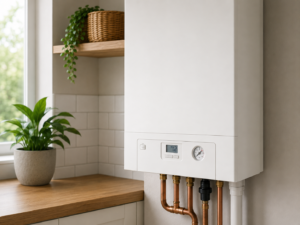
Why Might Your Boiler Pressure Be Too High?
If your boiler pressure is too high, it usually means there’s too much water or air inside the system. This imbalance can cause stress on internal components, leading to leaks, reduced efficiency, or even system failure if left unresolved.
Here are the most common reasons why boiler pressure might be too high:
-
Overfilled boiler system: Adding too much water when repressurising the boiler can cause the pressure gauge to exceed the recommended range (usually between 1 and 2 bars when cold).
-
Faulty pressure relief valve: This valve releases excess pressure. If it’s blocked, stuck, or damaged, the system can’t vent properly, causing pressure to rise.
-
Expansion vessel issue: The expansion vessel absorbs pressure changes as water heats and expands. If it’s faulty or the internal air charge is lost, pressure can build up rapidly.
-
Limescale or sludge build-up: Deposits within the system can restrict water flow and cause uneven pressure throughout your pipes and radiators.
-
Automatic filling loop left open: If the filling loop hasn’t been fully closed after topping up the system, water will continue to enter the boiler, pushing the pressure too high.
-
System overheating: A faulty thermostat or pump can cause the boiler to overheat, increasing water temperature and pressure beyond safe levels.
Signs of high boiler pressure
Recognising the signs that your boiler pressure is too high is crucial for preventing long-term damage to your heating system. Here are the most common indicators, along with why they occur and what they mean for your boiler:
Unusual noises
If your boiler begins to make strange sounds such as banging, hissing, or whistling, it could indicate high pressure. These noises occur because the excess pressure forces water or steam to move through the system irregularly or forcefully, placing strain on components like pipes and radiators. Ignoring these noises may lead to wear and tear, increasing the risk of breakdowns.
Leaks from the pressure relief valve
The pressure relief valve is a safety mechanism designed to release water when pressure exceeds safe levels. If you notice water leaking from this valve, it’s a sign that your boiler is under too much strain.
While this feature prevents dangerous pressure build-up, consistent leaks could indicate an ongoing problem that needs to be addressed, such as overfilling or a fault within the system.
High readings on the pressure gauge
The pressure gauge on your boiler provides a clear indicator of system pressure. Most boilers are designed to operate between 1 and 1.5 bars when cold. If the gauge shows a reading above 2 bars, it indicates high pressure.
Regularly monitoring the gauge can help you identify pressure problems early and avoid further complications, such as leaks or system malfunctions.
Reasons for high boiler pressure
Boiler pressure too high is a common issue that can affect the efficiency and safety of your heating system. While some pressure fluctuations are normal during operation, consistently high pressure can lead to leaks, component failure, and long-term damage if left unresolved.
There are several potential causes of high boiler pressure, ranging from simple user errors to mechanical faults. Understanding these reasons can help you diagnose the issue and take the appropriate steps to resolve it. Below are some of the most common causes:
Overfilled boiler system
One of the simplest and most frequent causes of high boiler pressure or the boiler pressure rising is an overfilled boiler system.
This happens when too much water is added to the boiler during a manual refill. Since the pressure rises with increased water volume, overfilling can push the pressure above the safe operating range. This is especially common if the filling loop has been left open accidentally.
Solution: Check the pressure gauge regularly during refilling to ensure you don’t exceed the recommended level (typically 1 to 1.5 bars). If your boiler is overfilled, you may need to bleed a radiator to release some water and lower the pressure.
Faulty pressure relief valve
The pressure relief valve (PRV) is a safety feature that releases excess pressure from the boiler to prevent damage. If this valve becomes faulty or clogged, it may fail to regulate the pressure effectively. This could lead to a pressure build-up, as the system cannot expel excess water as designed.
Solution: Inspect the PRV for leaks or blockages. You may also need boiler maintenance to be cleaned or replaced by a professional to restore its function.
Failing expansion vessel
The expansion vessel absorbs the increased water pressure that occurs when your boiler heats up. If this vessel becomes faulty or loses its air charge, it won’t be able to accommodate the pressure changes, resulting in consistently high readings. A failing expansion vessel can also cause frequent triggering of the PRV.
Solution: Check if the expansion vessel has lost pressure or has become waterlogged. This often requires professional assistance to re-pressurise or replace the vessel.
Does the boiler pressure rise when heating is on?
Yes, it’s normal for boiler pressure to rise slightly when the heating is on. This happens because water expands as it heats up, increasing the pressure in the system.
Typically, boiler pressure should rise from around 1.0 bar (when cold) to 1.5–2.0 bar (when heating is on). If the pressure exceeds this level (above 2.5–3.0 bar), it may indicate a problem, such as an overfilled boiler system or a faulty expansion vessel.
Other Potential Causes
-
Blockages in the System: Clogged pipes or radiators can create pressure imbalances.
-
Limescale Build-Up: Hard water deposits in the heat exchanger can reduce the efficiency of the system, leading to pressure increases.
-
Faulty Pressure Gauge: In rare cases, the gauge itself may provide inaccurate readings, masking or exaggerating the problem.
How to fix high boiler pressure
High boiler pressure can usually be resolved with a few straightforward steps, depending on the cause of the issue. Addressing the problem promptly helps maintain the safety and efficiency of your heating system. Below are effective solutions to fix high boiler pressure:
Bleed radiators
If your boiler’s pressure is too high, bleeding your radiators can help release the excess water in the system, lowering the pressure to the recommended level.
Steps to Bleed Radiators:
-
Turn off the boiler and let the system cool down completely.
-
Locate the bleed valve on the radiator (usually near the top) and have ready a radiator key and a cloth or small container.
-
Use the key to turn the valve slowly anti-clockwise. You’ll hear a hissing sound as trapped air escapes.
-
Once water starts to trickle out, close the valve by turning it clockwise.
-
Check the boiler’s pressure gauge to ensure it’s within the optimal range (1 to 1.5 bars).
If bleeding the radiators doesn’t reduce the pressure enough, there may be another underlying issue.
Check the pressure relief valve
The pressure relief valve is designed to release excess pressure to protect your boiler. However, if the valve is blocked or faulty, it may not function correctly, causing pressure to remain high.
Steps to Check the PRV:
-
Inspect the area around the PRV for leaks or signs of damage.
-
If you suspect a blockage, consult your boiler’s manual to see if you can safely clean the valve.
-
If cleaning doesn’t resolve the issue, or the valve is damaged, it may need replacing. This is a job best handled by a professional to ensure the system remains safe.
Recharge or replace the expansion vessel
The expansion vessel helps regulate pressure as water expands when heated. A faulty or undercharged vessel can cause pressure to rise beyond safe levels.
How to Recharge the Expansion Vessel:
-
Turn off the boiler and allow it to cool.
-
Locate the Schrader valve on the expansion vessel, which resembles a tyre valve.
-
Use a pressure gauge to check the vessel’s air pressure. It should typically read between 0.8 and 1 bar.
-
If the pressure is too low, use a hand pump to add air until it reaches the correct level.
-
If the vessel is waterlogged or cannot hold air, it will need to be replaced by a professional engineer.
Preventing high boiler pressure
Preventing boiler pressure from becoming too high is key to ensuring the longevity and safety of your heating system. By adopting a proactive approach, you can avoid the need for costly boiler repairs and maintain the efficiency of your boiler. Here are two key practices to help prevent high pressure:
Regular maintenance checks
Regular boiler servicing and maintenance checks are essential to ensure all parts of your boiler system are functioning properly. A professional engineer can inspect the various components, such as the pressure relief valve and expansion vessel, to ensure they’re working efficiently.
What to Expect from a Maintenance Check:
-
Inspection of pressure settings: Ensuring the pressure gauge reads within the optimal range.
-
Checking the expansion vessel: Ensuring the vessel holds air and is in good condition.
-
Cleaning and testing the pressure relief valve: Making sure it’s free from blockages and operating correctly.
-
General system checks: Inspecting for leaks, blockages, or other issues that might lead to pressure problems.
Proper pressure-setting adjustments
Ensuring that your boiler’s pressure is set correctly is crucial to avoiding excess pressure. The system should typically be filled to around 1 to 1.5 bars when cold. If the pressure is too high, it may stress the system, leading to leaks or damage.
How to Adjust Pressure Safely:
-
Check the pressure regularly: Especially after any maintenance or if you’ve recently topped up the system.
-
Use the filling loop properly: Be mindful not to overfill your system when topping up the pressure. If the pressure gauge reads above 2 bars, release some water by bleeding a radiator to bring it back to the safe range.
-
Ensure the filling loop is properly closed: Leaving it open can cause the pressure to increase unintentionally.
Ensuring the correct pressure settings and regular maintenance can significantly reduce the risk of high boiler pressure and ensure your heating system operates efficiently.
Want to find out more about boiler pressure? Let’s Chat!
If you have any further questions, please do not hesitate to get in touch and call us on 0333 3445 570. We would be more than happy to discuss and let you know how we can help with any issues with your high boiler pressure.
We’re here to help!
FAQs about High Boiler Pressure
What causes high boiler pressure?
High boiler pressure is usually caused by too much water in the system or a faulty pressure relief valve. It can also happen if the filling loop was left open after topping up the boiler.
Is high boiler pressure dangerous?
Not usually. Most modern boilers have safety features that shut the system down if the pressure gets too high. However, it’s best to fix the issue quickly to avoid leaks or damage.
What should my boiler pressure be?
When your heating is off, the pressure should sit between 1 and 1.5 bar. When it’s on, it can rise slightly, up to about 2 bars is normal. Anything above 2.5 to 3 bars may indicate a problem.
How can I reduce boiler pressure?
You can release excess pressure by bleeding your radiators or using the pressure relief valve. If you’re unsure or the pressure keeps rising, contact a Gas Safe engineer.
Can high pressure damage my boiler?
Yes, prolonged high pressure can cause leaks and strain on seals or components. It’s best to check your pressure gauge regularly and address issues early to avoid costly repairs.