TL;DR: Planning permission for solar panels usually isn’t needed for standard roof-mounted domestic installations, thanks to permitted development rights. But extra restrictions can apply to listed buildings, conservation areas, ground-mounted arrays and larger systems, and the rules vary across England, Scotland, Wales and Northern Ireland. Always check with your local planning authority and installer before work begins.
If you’re considering solar panels for your home, one of the first questions you may have is whether you need planning permission.
In many cases, domestic solar panels can be installed without submitting a full planning application because permitted development rights apply. However, certain conditions and restrictions must be met.
Additional planning considerations can apply to listed buildings, properties in conservation areas and some ground-mounted solar installations. The rules can also differ across England, Scotland, Wales and Northern Ireland.
When Do Solar Panels Need Planning Permission?
For many homeowners, roof-mounted solar panels fall under permitted development rights. This means you may be able to install them without making a planning application, provided the installation meets the relevant conditions.
However, planning permission may be required depending on factors such as:
- Where the panels are being installed
- Whether they are roof-mounted or ground-mounted
- Whether the property is listed
- Whether the property is in a conservation area
- Whether permitted development rights apply to the property
- The size, position and projection of the installation
It’s therefore important to check the specific circumstances of your property before installation begins.
Roof-Mounted Solar Panels
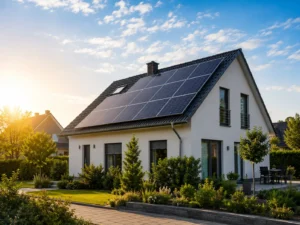
Roof-mounted solar panels are the most common type of domestic installation. In many cases, they can be installed under permitted development rights rather than requiring a full planning application.
There are conditions relating to how far the panels project from the roof, their position and the effect they have on the building. Installations should also generally be positioned so that they do not create unnecessary visual or safety issues.
If you’re unsure whether your proposed installation meets the permitted development conditions, your installer or local planning authority can help clarify the requirements.
Ground-Mounted Solar Panels
Ground-mounted solar panels are subject to different considerations from panels installed on a roof.
The size, height and location of the installation can affect whether it falls within permitted development rights. For example, a larger ground-mounted array may require planning permission where a smaller domestic installation would not.
If you’re considering installing panels in a garden or elsewhere on your property, check the applicable planning rules before purchasing equipment or starting work.
Solar Panels on Garages and Outbuildings
Solar panels installed on garages, sheds or other outbuildings can also be possible without a full planning application, but the circumstances matter.
The building itself, its location and the design of the proposed installation can all affect the planning requirements. It’s important not to assume that the same rules automatically apply to every outbuilding.
Can You Install Solar Panels Without Planning Permission?
In many cases, yes. This is possible because of permitted development rights.
Permitted development rights allow certain types of home improvement and development to take place without submitting a conventional planning application, provided the work complies with specific conditions.
For solar panels, these rights can make the installation process simpler for homeowners. However, they aren’t a blanket exemption from planning controls.
Before solar panel installation, you should establish whether the proposed system meets the relevant permitted development requirements.
What Are Permitted Development Rights?
Permitted development rights are rules that allow certain development to take place without applying for planning permission.
For domestic solar panels, the applicable conditions can cover factors such as the position of the panels, how far they project from a roof and whether the installation is on a building or mounted on the ground.
If an installation does not meet the relevant conditions, a planning application may be necessary.
When Might Permitted Development Rights Not Apply?
Additional restrictions can apply to certain properties and locations.
For example, you may need to investigate planning requirements more carefully if:
- Your property is a listed building
- Your home is within a conservation area
- The installation is unusually large
- You’re installing ground-mounted panels
- Permitted development rights have been restricted or removed
- The property is subject to specific local planning restrictions
This is why checking your individual property is more reliable than assuming that all solar installations are automatically exempt.
Do Solar Panel Rules Differ Across the UK?
Planning is a devolved matter, so the rules aren’t identical across England, Scotland, Wales and Northern Ireland.
Guidance on permitted development and solar installations can therefore vary depending on where you live.
If you’re in England, check the relevant national planning guidance as well as your local planning authority. Homeowners in Scotland, Wales and Northern Ireland should check the planning guidance applicable to their nation.
This is particularly important if you’re reading general advice online, as information written for another part of the UK may not apply to your property.
Do Solar Panels Need Planning Permission on a Listed Building?
Listed buildings have additional planning and heritage protections, meaning you should take particular care before installing solar panels.
Even where a typical domestic solar installation may benefit from permitted development rights, listed building considerations can change the requirements.
If your property is listed, check with your local planning authority before proceeding. You may need listed building consent, planning permission or both, depending on the proposed work.
It’s also worth discussing the installation with an experienced solar installer who understands the additional considerations associated with listed properties.
Do Solar Panels Need Planning Permission in a Conservation Area?
Conservation areas are designated because of their special architectural or historic character. As a result, additional restrictions can apply to development within them.
Solar panels may still be possible, but the location and visibility of the installation can affect the applicable requirements.
If your property is in a conservation area, don’t rely solely on general permitted development guidance. Check your local planning authority’s requirements before installation.
How to Check If You Need Planning Permission
Before installing solar panels, there are several steps you can take to establish whether planning permission is necessary.
1. Check Your Property
Start by considering the type of property and where the panels will be installed.
A standard roof-mounted system may have different planning requirements from a ground-mounted array or panels installed on an outbuilding.
2. Check Whether Your Property Is Listed
If your home is listed, additional restrictions may apply. You should establish this before agreeing to the installation.
3. Check for Conservation Area Restrictions
Find out whether your property is located within a conservation area and check the relevant local guidance.
4. Check Your Local Planning Authority
Your local planning authority can provide information about planning requirements affecting your property.
This is particularly useful where you’re unsure whether your proposed installation falls within permitted development rights.
5. Speak to Your Solar Installer
A reputable solar installer should be able to explain the planning considerations associated with the proposed system and advise you on what needs to be checked before work begins.
However, homeowners should still confirm the relevant requirements rather than assuming that every installation is automatically exempt.
What Else Should You Check Before Installing Solar Panels?
Planning permission isn’t the only consideration when installing solar panels.
You should also think about the suitability of your roof, the condition of the building, electrical requirements and how the system will connect to the electricity network.
Depending on the installation, you may also need to consider:
- Building regulations
- Electrical certification
- Distribution Network Operator (DNO) requirements
- Structural suitability
- Inverter and battery installation
- Roof orientation and available space
If you’re also installing a battery or EV charger, it’s worth considering how these technologies can work together as part of a wider home energy system.
Common Solar Panel Planning Permission FAQs
Do all solar panels need planning permission?
No. Many domestic solar panel installations can be carried out under permitted development rights, provided the relevant conditions are met. However, some properties and installations require additional planning consideration.
Do solar panels need planning permission on a listed building?
They may. Listed buildings are subject to additional protections, so you should check the requirements with your local planning authority before installation.
Do ground-mounted solar panels need planning permission?
Not necessarily, but ground-mounted systems have different permitted development conditions. The size, height and location of the installation can affect whether planning permission is required.
Do solar panels need planning permission in a conservation area?
Additional restrictions can apply in conservation areas. You should check the requirements for your specific property and local authority before proceeding.
Do solar batteries need planning permission?
A typical domestic battery installation may not require planning permission in many circumstances, but requirements can vary depending on how and where the equipment is installed. Your installer should assess the proposed system as part of the installation process.
Do You Need Planning Permission for Solar Panels?
So, do you need planning permission for solar panels? In many cases, homeowners can install domestic solar panels without submitting a full planning application because permitted development rights apply.
However, these rights are subject to conditions, and additional restrictions can apply to listed buildings, conservation areas, ground-mounted systems and other properties or installations.
Before work begins, check the rules that apply to your property, speak to your local planning authority where necessary and use an experienced solar installer.
Taking these steps before solar panel installation can help you avoid unexpected planning issues and ensure your solar panel system is installed legally and appropriately.