TL;DR: A radiator not heating up is usually caused by simple issues like trapped air, low boiler pressure, faulty valves, or thermostat settings, but it can also point to deeper system problems. Checking the thermostat, bleeding the radiator, and ensuring the boiler pressure is correct often resolve the issue quickly.
Cold radiator, boiler running fine? Nine times out of ten it’s one of four things: trapped air, low pressure, a stuck valve, or a thermostat that’s lost the plot.
Work through them in that order, and you’ll usually find the fault before you need to call anyone out, but if you don’t, we’ll cover when it’s time to get an engineer involved instead
Common frustrations when a radiator fails to heat up
A cold radiator isn’t just annoying; it’s usually your system telling you something specific is wrong. And it’s especially frustrating when you’ve already bled it or fiddled with the thermostat, and nothing’s changed
You might find yourself dealing with cold spots in specific rooms, despite the boiler running as usual. Inconsistent temperatures, increased energy bills, or a radiator that remains cold while others function properly can all be signs of an underlying issue.
For homeowners, it’s frustrating when you’ve bled the radiator or adjusted the thermostat and still see no change. It can also be stressful during colder months, especially when you rely on consistent heat.
Understanding How Radiators Work
Radiators are an essential part of most central heating systems, designed to distribute heat evenly throughout your home.
When you find a radiator not heating up, it helps to first understand how these systems are meant to function.
Basic principles of radiator heating
Radiators work by receiving hot water or steam from your boiler. This heat is then transferred to the metal surface of the radiator and radiates outward to warm the air.
The process relies on a constant flow of heated water through a closed-loop system. If something disrupts that flow, like airlocks, sludge build-up, or faulty valves, you may notice a radiator failing to heat properly.
Types of radiators
There are several types of radiators used in UK homes:
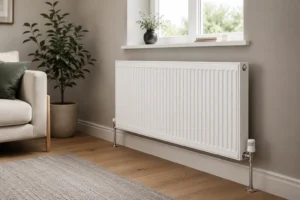
- Panel radiators: the most common type, wall-mounted, compact, and efficient for most modern homes.
- Column radiators: traditional in appearance, with strong heat output and well-suited to period properties.
- Towel radiators: commonly used in bathrooms to warm towels while also heating the room.
- Electric radiators: operate independently from the central heating system and use electricity as their power source.
Importance of proper maintenance
Routine maintenance plays a key role in avoiding common heating issues. Regularly bleeding your radiators, checking for cold spots, and booking annual boiler servicing help keep your system running smoothly. Neglecting this can lead to inefficiencies and eventually to the frustration of a radiator not heating up when you need it most.
Check the Thermostat Settings
Before assuming there’s a major fault in your system, it’s worth checking whether the thermostat is to blame. A poorly set or malfunctioning thermostat is one of the most common reasons for a radiator not heating up.
How does a thermostat work?
A thermostat monitors the ambient temperature in your home and signals the boiler to switch on or off to maintain your chosen setting.
When the room reaches the desired temperature, the thermostat tells the boiler to stop sending hot water to the radiators. If the thermostat is not functioning correctly, your heating system may not respond as it should, leaving radiators cold even when the boiler is on.
Common thermostat issues that can affect heating
Any of these can result in parts of your home, or individual radiators, not heating up as expected. Here are some of the most common thermostat issues when your radiator is not heating up:
- Incorrect settings: Sometimes the thermostat is simply set too low to trigger the heating.
- Dead batteries (for wireless models): A flat battery means the signal won’t reach the boiler.
- Positioning problems: If it’s placed near a heat source or in direct sunlight, it can misread the temperature.
- Old or faulty models: Worn-out thermostats can fail to communicate with your system reliably.
Tips for adjusting and troubleshooting the thermostat
Here are some useful tips for adjusting and troubleshooting your thermostat if your radiator isn’t heating up as expected:
- Double-check the temperature setting; ensure it’s higher than the current room temperature.
- Replace batteries if you’re using a wireless or programmable model.
- Move the thermostat to a more neutral location if it’s affected by external heat.
- Restart the system or consult your thermostat’s manual to reset the device.
Air Trapped in the Radiator
One of the most common reasons for a radiator not heating up properly is air trapped inside the system. When air gets into your heating pipes or radiators, it prevents hot water from circulating fully, leaving parts of the radiator cold, usually at the top.
How can air prevent proper heating?
Radiators rely on a steady flow of hot water to distribute heat evenly. If air becomes trapped, it rises to the top of the radiator and blocks the flow of water, reducing efficiency. This results in uneven heating or a radiator not heating up at all.
Signs of trapped air
If you suspect air is trapped in the radiator and you’ve found your radiator not heating up, look out for these common warning signs that often point to circulation issues:
- The top of the radiator feels cold, while the bottom is warm, and cold spots in your radiator
- Gurgling or bubbling sounds when the heating is on
- The radiator takes longer to warm up than the others in the system
- You’ve recently had work done on the heating system or topped up the boiler pressure
Step-by-step guide to bleeding a radiator
Bleeding your radiator is a simple task that can quickly resolve the issue of your radiator not heating up. Here’s how to do it safely and effectively:
- Turn off your central heating and let the radiator cool completely.
- Use a radiator key to slowly open the bleed valve at the top corner of the radiator.
- You’ll hear a hissing sound as trapped air escapes.
- Once water starts to flow out steadily, close the valve tightly.
- Turn the heating back on and check if the radiator is heating evenly.
- If necessary, top up the boiler pressure after bleeding your radiator.
Insufficient Boiler Pressure
Low boiler pressure is another common culprit. Low pressure in the system can prevent hot water from circulating properly, leaving radiators cold or only partially warm.
Importance of boiler pressure for radiator function
Boiler pressure is essential for pushing hot water through your heating system and into the radiators. When the pressure drops too low, the system can’t circulate water efficiently, which often leads to your radiator not heating up, especially those furthest from the boiler.
How to check and adjust boiler pressure
Most boilers have a pressure gauge on the front panel. Ideally, the needle should sit between 1 and 2 bars when the system is cold.
- If it’s below 1, the pressure is likely too low.
- To increase it, use the filling loop (usually located underneath the boiler) to carefully add water until it reaches the recommended level.
- Always follow the manufacturer’s instructions or consult a professional if unsure.
Signs of low pressure and potential solutions
To resolve the issue, repressurise the system using the filling loop, and keep an eye on the pressure over the following days. If the pressure keeps dropping, it could point to a leak or faulty component, which should be checked by a heating engineer.
- Radiators stay cold even when the boiler is on
- The boiler displays a low-pressure warning or error code
- Gurgling noises or irregular heating patterns
Blocked or Clogged Radiator
A blockage inside the radiator itself is worth ruling out next. Over time, a build-up of sludge, rust, or debris can restrict the flow of hot water, reducing efficiency and leaving radiators cold or unevenly heated.
Common causes of blockages
Understanding what causes these blockages can help you prevent future issues and maintain your radiator’s performance. Here are some common causes of blockages:
- Sludge build-up: A mix of rust, dirt, and limescale that settles at the bottom of the radiator
- Corrosion: Internal rusting can break away and collect in the system
- Old or unmaintained systems: Older heating systems are more prone to debris and sediment forming over time
Symptoms of a clogged radiator
Spotting the signs of a clogged radiator early can save you from larger heating system problems down the line. Here are some of the symptoms of a clogged radiator:
- Cold patches, especially at the bottom of the radiator
- The radiator heats unevenly or takes longer than others
- Discoloured water when bleeding the radiator
- Unusual noises such as knocking or gurgling when the heating is on
How to clean or flush a radiator
If you suspect a blockage, flushing the radiator can often resolve the issue, and it’s something you can do yourself with the right steps.
- Turn off the heating and let the radiator cool.
- Close the valves at both ends of the radiator.
- Use a spanner to disconnect the radiator and drain it into a bucket.
- Take the radiator outside and flush it through with clean water using a hose.
- Keep flushing until the water runs clear.
- Reconnect the radiator, turn the valves back on, and bleed the radiator to remove any trapped air.
Faulty Valves and Controls
If a radiator is not heating up, don’t overlook the valves. These small but important components regulate how hot water flows through the radiator, and if they’re stuck or faulty, they can stop your heating from working properly.
Signs of malfunctioning valves
Knowing what to look for can help you spot valve issues early, before they affect your entire heating system.
- The radiator stays cold even when others are working
- The valve feels loose, stuck, or unusually stiff
- There’s no change in heat output when you turn the valve
- Thermostatic radiator valves fail to adjust the room temperature as expected
How to inspect and replace faulty valves
If you suspect a valve is the problem, a quick inspection can confirm it, and in some cases, a simple replacement can solve the issue entirely.
- Turn off the heating and allow the radiator to cool.
- Gently test the valve to see if it moves freely. If it’s stuck, it may need freeing up or replacing.
- For thermostatic valves, remove the cap and check if the pin inside moves up and down when pressed.
- If the valve appears broken or damaged, it’s best to replace it with a like-for-like model.
- Always isolate the radiator and drain any water before attempting a replacement, or consult a heating engineer for a safe, professional fix
Issues with the Heating System
Still no luck after bleeding, checking valves, and adjusting pressure? The problem’s likely in the boiler or wider system. These deeper issues can affect how heat is generated and distributed throughout the home, and they often require expert attention.
Potential problems with the boiler or heating system
The boiler is the heart of your central heating system; if it’s not working properly, none of your radiators will function as they should. Some of the most common issues include:
- A faulty pump that can’t push hot water around the system
- A broken thermostat failing to communicate with the boiler
- Airlocks or blockages in the pipework
- Electrical faults or low boiler output pressure
Importance of regular system maintenance
Annual servicing and regular maintenance play a crucial role in keeping your heating system working safely and efficiently. A routine boiler service helps to:
- Identify faults early
- Remove sludge or build-up in the system
- Check that all components are working correctly
- Improve energy efficiency and reduce bills
When to call a professional for help
If basic checks haven’t resolved the issue and you’re still dealing with a radiator not heating up, it’s time to call in a professional. A Gas Safe registered engineer can:
- Inspect and repair boiler components
- Power flush the system to remove sludge
- Identify hidden leaks or pressure problems
- Safely replace worn parts or upgrade old systems
Environmental Factors When Your Radiator is Not Heating Up
Sometimes, the issue isn’t with the radiator or boiler at all. It’s the environment around them. If you’re noticing a radiator not heating up, especially during colder months, external temperatures and poor insulation can be reducing your system’s effectiveness.
How external temperatures can affect radiator performance
Extreme cold weather can put extra demand on your heating system. When outdoor temperatures drop significantly, your boiler must work harder to heat water, and radiators may take longer to warm up or struggle to maintain consistent heat.
Poorly lagged pipes or external walls can also lose heat quickly, making radiators seem underpowered even if the system is functioning normally.
Insulation and drafts impacting heating efficiency
Heat loss is a major factor in inefficient home heating. If your home has inadequate insulation or draughty windows and doors, warm air escapes quickly, making rooms feel colder and forcing your radiators to work overtime.
This can lead you to believe a radiator is not heating up, when in fact, the heat is simply being lost faster than it’s being produced.
Tips for improving home insulation
Improving your home’s insulation can significantly boost radiator efficiency and overall comfort. Simple changes include:
- Sealing window and door drafts with weatherstripping
- Adding thermal curtains or blinds
- Installing or upgrading loft and wall insulation
- Using radiator reflector panels to reduce heat loss through external walls
- Bleeding radiators regularly to ensure they’re working at full capacity
Want to find out more? Let’s Chat!
Still got a cold radiator after trying all this? Give us a call on 0333 344 5570, and we’ll send an engineer out to find the fault and get your heating back to full strength.
We’re here to help!
Radiator Not Heating Up: FAQs
Why is only one radiator cold when the rest of the house is warm?
Nine times out of ten, it’s trapped air or a closed valve on that one radiator. The rest of the system is circulating fine, so it’s isolated to that unit.
Bleed it first; if that doesn’t sort it, check that both valves are actually open, including the lockshield valve, which sometimes gets nudged shut during cleaning.
I’ve bled the radiator, and it’s still cold; what next?
Move on to boiler pressure and the valves. If the gauge reads under 1 bar, top it up via the filling loop and see if that clears it. If pressure’s fine, feel the pipework going into the radiator; cold pipes on both sides usually point to a stuck valve rather than trapped air.
Is a cold radiator ever a sign of something more serious?
Yes. If you’re repressurising the system every few days, or several radiators go cold at once, that’s usually a leak, a failing pump, or a blocked pipe rather than something you can fix by bleeding.
That’s when it’s worth getting a Gas Safe engineer out before it turns into a bigger repair.
How often should radiators actually need bleeding?
Not often, if your system’s healthy. Maybe once a year when you switch the heating back on for winter.
If you’re bleeding the same radiator every few weeks, there’s a corrosion or airlock issue further up the system that a quick bleed won’t solve long-term.
Can I flush a radiator myself, or is that a job for an engineer?
You can do a basic flush yourself with the steps in this guide, but if the water’s coming out black or full of sludge, that’s usually a sign the whole system needs a proper power flush rather than a DIY job.