TL;DR: When comparing tethered vs untethered EV chargers, tethered chargers offer quick, convenient charging with a built-in cable always ready to use, while untethered EV chargers provide greater flexibility for different vehicles and future upgrades. Both options support efficient home EV charging, so the best choice depends on your preferences, vehicle setup, and long-term needs.
As electric vehicles become more common, EV owners need to choose the right home charging setup.
One of the key decisions is whether to install a tethered or untethered charger. While both options deliver the same result, reliable charging at home, they differ in convenience, flexibility, and overall usability.
How do Tethered EV Chargers work?
A tethered EV charger is a home charging unit that comes with a permanently attached charging cable.
This means the cable is built into the charger, so you plug the connector directly into your electric vehicle without needing a separate lead each time.
What are tethered chargers?
Tethered chargers prioritise simplicity and convenience. The unit permanently houses the charging cable, usually wall-mounted in your home, and is ready to use whenever you need it.
Once installed, the setup remains the same, so there’s no need to store or handle a separate cable. This makes everyday charging quick and straightforward, especially for regular EV users.
Common use cases and installation scenarios
Homeowners commonly use tethered chargers in residential driveways or private parking spaces where a single vehicle is charged regularly. They’re particularly popular for homeowners who want a simple “plug-in and charge” setup without extra steps.
Installers typically mount tethered chargers on an exterior wall or inside a garage, positioned close to where the vehicle is parked to ensure the cable comfortably reaches the charging port.
Typical charging speeds and compatibility
Manufacturers usually offer tethered chargers in standard home charging speeds, most commonly 7kW, with some faster options depending on the property’s electrical supply.
They are compatible with most modern electric vehicles, although the connector type (such as Type 1 or Type 2) is fixed, meaning it’s important to choose a unit that matches your current or future vehicle.

How do Untethered EV Chargers work?
Untethered EV chargers use a removable charging cable instead of a fixed one.
Instead, they use a socket that you plug your own charging cable into whenever you need to charge your electric vehicle. This gives you a more flexible setup, but requires a bit more interaction each time you charge.
What are untethered chargers?
An untethered charger is essentially a wall-mounted charging point with a universal socket. You connect a separate cable between the charger and your car, meaning you’re not limited to a permanently attached lead.
Once charging is complete, you unplug the cable and store it yourself, keeping the unit clean and minimal in appearance.
Common use cases and installation scenarios
Households with multiple electric vehicles often choose untethered chargers or those where future flexibility is important.
They also create a neater-looking installation of an EV charger, since there’s no cable hanging from the unit when it’s not in use.
Installers fit untethered chargers in much the same way as tethered units. This is usually on an exterior wall or in a garage close to where the car is parked, with enough space to comfortably plug in and store the cable.
Typical charging speeds and compatibility
Like tethered units, untethered chargers commonly operate at 7kW for standard home charging, with faster options available depending on your electrical supply.
Most electric vehicles work with untethered chargers, provided you use the correct charging cable for your vehicle type. This makes them a more adaptable option, especially if you plan to change vehicles in the future.
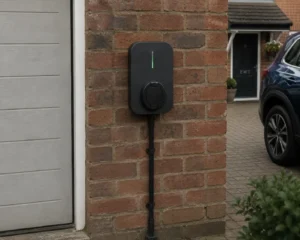
Comparison of Tethered vs Untethered EV Chargers
| Feature | Tethered Charger | Untethered Charger |
| Cable | Built-in | Separate removable cable |
| Convenience | Very convenient | Slightly less convenient |
| Flexibility | Limited | High |
| Best for | Single EV households | Multiple EVs/future upgrades |
| Appearance | Cable visible | Cleaner look |
| Future-proofing | Moderate | Strong |
Pros of Tethered EV Chargers
Many homeowners who want a simple and convenient charging setup choose tethered EV chargers.
With a permanently attached cable, tethered chargers make everyday charging quicker and more straightforward, making them an attractive option for regular EV use.
| Advantage | Detailed Explanation |
| Built-in charging cable | The charging cable is permanently attached to the charger, allowing you to plug in immediately without needing to connect a separate lead each time you charge your vehicle. |
| Faster everyday charging | With the cable always ready to use, tethered chargers make day-to-day charging quicker and more convenient, especially for drivers who charge regularly. |
| Simple plug-and-charge setup | Tethered chargers create a more straightforward user experience with fewer components to manage, making them ideal for first-time EV owners or single-EV households. |
| Reduced risk of cable theft or loss | Because the cable stays attached to the unit, there is less chance of it being misplaced, stolen, or forgotten compared to portable charging leads. |
| Integrated cable storage | Many tethered chargers include built-in cable holders or management systems, helping keep the installation tidy and organised when the charger is not in use. |
| Convenient in poor weather | Not having to retrieve or connect a separate cable can make charging more practical during rain, frost, or colder weather conditions. |
Cons of Tethered EV Chargers
While tethered EV chargers offer convenience, they also have some limitations.
Depending on your vehicle setup, parking arrangement, and plans, these drawbacks may be worth considering before EV installation.
| Drawback | Detailed Explanation |
| Limited flexibility | The permanently attached cable means you are restricted to the cable length and connector type supplied with the charger. |
| Less future-proof | If you change vehicles in the future, the fixed connector may become less suitable without using adapters or replacing the charger entirely. |
| Cable always visible | Because the cable remains attached to the unit, tethered chargers can appear less minimalist or tidy compared to untethered alternatives. |
| Potential cable wear over time | The cable is regularly handled and continuously exposed to outdoor conditions, which can contribute to gradual wear from weather, bending, and repeated use. |
| Less adaptable for multiple EVs | Households with different EV models may find tethered chargers less convenient if vehicles require different cable types or charging standards. |
| Fixed parking setup | If your parking arrangement changes, the attached cable may not comfortably reach the charging port without repositioning the vehicle. |
Pros of Untethered EV Chargers
Many homeowners choose untethered EV chargers for their flexibility and future-proofing.
Separate charging cables give untethered chargers greater adaptability for different vehicles and changing charging needs over time.
| Advantage | Detailed Explanation |
| Greater flexibility | Untethered chargers allow you to use different charging cables depending on the vehicle, making them suitable for households with multiple EVs. |
| More future-proof | Because the cable is removable, it is easier to adapt to new charging standards or different vehicle connector types in the future. |
| Cleaner appearance | Without a permanently attached cable, untethered chargers create a neater, more minimalist electric vehicle installation when not in use. |
| Easier cable replacement | If the charging cable becomes damaged or worn, it can usually be replaced separately without needing to replace the entire charging unit. |
| Flexible cable lengths | You can choose different cable lengths to better suit parking layouts, garage setups, or charging access requirements. |
| Better long-term adaptability | Untethered systems can be easier to update as EV technology evolves, helping extend the lifespan of the charger itself. |
Cons of Untethered EV Chargers
While untethered EV chargers offer greater flexibility, they can be slightly less convenient for everyday use.
The charging cable isn’t built into the unit; there are a few extra considerations when it comes to storage, security, and ease of use.
| Drawback | Detailed Explanation |
| Less convenient for daily use | Drivers need to retrieve, connect, disconnect, and store the charging cable each time they charge the vehicle. |
| Separate cable storage required | The charging cable must be stored safely when not in use, which can add extra organisation and clutter depending on the setup. |
| Greater risk of theft or damage | Because the cable is detachable and portable, it is more vulnerable to being misplaced, stolen, or damaged during transportation and storage. |
| Slightly more complex setup | Untethered chargers may feel less intuitive for first-time EV owners, particularly when choosing compatible charging cables. |
| Additional upfront cable cost | Some untethered chargers may not include a charging cable as standard, meaning you may need to purchase one separately. |
| More handling of the cable | Repeatedly moving and storing the cable can increase wear over time, particularly if it is regularly exposed to dirt, moisture, or poor storage conditions. |
Cost Considerations
When comparing tethered and untethered EV chargers, many homeowners focus on EV charging cost.
While the difference in price isn’t always significant, installation, maintenance, and long-term flexibility can all influence which option offers better value over time.
Comparison of EV installation and maintenance costs for both types
In many cases, installers charge similar rates for tethered and untethered EV chargers, as both require a dedicated electrical connection and professional setup.
However, tethered chargers can sometimes cost slightly more upfront due to the integrated charging cable and built-in cable management features.
If weather or repeated use damages a tethered cable, repairs or replacements may be more involved, whereas untethered systems allow cables to be replaced separately without changing the charger itself.
Long-term cost implications for EV owners
Over the long term, the right charger depends on how your charging needs may evolve.
- Tethered chargers offer convenience but may become less adaptable if you switch vehicles or need different cable types in the future.
- Untethered chargers can be more flexible and potentially cheaper to update over time, as cables can be upgraded or replaced independently.
Energy efficiency and charging performance are generally similar between the two options, so ongoing electricity costs are unlikely to differ significantly.
Availability of incentives or rebates for different charger types
In some cases, grants, incentives, or local schemes can reduce the installation costs of EV chargers.
Property type, installation location, and smart features usually determine eligibility rather than whether the unit is tethered or untethered.
It’s always worth checking current government or energy provider schemes to see what support may be available at the time of installation.
Environmental Impact
As electric vehicles continue to support the shift towards lower-emission transport, the type of charging infrastructure installed at home also plays a role in long-term sustainability.
While both tethered and untethered chargers help support cleaner driving, there are some environmental considerations worth thinking about when choosing between the two.
Discussion on the sustainability of tethered vs untethered chargers
Manufacturers design both charger types to support efficient EV charging, but their long-term sustainability can differ slightly.
- Tethered chargers may generate more waste if the permanently attached cable becomes damaged and requires repair or replacement.
- Untethered chargers, on the other hand, allow cables to be swapped independently, which can extend the lifespan of the main charging unit.
However, untethered systems may involve additional accessories or replacement cables over time, depending on usage and vehicle changes.
Considerations for reducing waste and promoting recycling
Choosing durable, high-quality EV charging equipment can help reduce unnecessary waste and extend product lifespan. Proper cable storage and maintenance also play a part in preventing avoidable damage and replacement.
As EV charging technology develops, many manufacturers are increasingly focusing on recyclable materials, repairable components, and more sustainable production methods to minimise environmental impact over time.
The role of charging infrastructure in supporting green energy initiatives
Reliable home charging infrastructure supports wider green energy adoption and the transition to electric vehicles.
Smart EV chargers help homeowners manage energy demand more efficiently, particularly when paired with renewable energy sources such as solar panels or off-peak electricity tariffs.
As charging networks and renewable technologies continue to improve, home EV chargers will play an increasingly important role in creating a more sustainable and energy-efficient future.
Tethered vs Untethered EV Chargers FAQs
What is the difference between a tethered and untethered EV charger?
A tethered EV charger has a charging cable permanently attached to the unit, while an untethered charger uses a separate, removable cable that you plug in when needed.
Are tethered EV chargers better for home use?
Tethered chargers are often preferred for convenience because the cable is always ready to use. They’re ideal for homeowners who charge the same vehicle regularly and want a quicker plug-in experience.
Can an untethered EV charger work with different cars?
Yes. Untethered chargers are more flexible because you can use different charging cables depending on the vehicle, making them useful for households with multiple EVs or future vehicle changes.
Do tethered EV chargers cost more to install?
In some cases, tethered chargers can be slightly more expensive upfront due to the built-in cable and cable management features, although installation costs are usually fairly similar overall.
Which EV charger is more future-proof?
Most homeowners and installers consider untethered chargers more future-proof. They allow you to replace or upgrade cables separately if charging standards or vehicle requirements change over time.